
Zomato shares may see limited upside in the near-term amid news-flow around government-backed ONDC expanding its footprint in the delivery market, believe analysts. Zomato shares have dropped 4 per cent in three days on the BSE. By comparison, the benchmark S&P BSE Sensex has added 0.2 per cent.

While foreign currency rating was retained at Baa2 -- the second-lowest investment grade score -- Moody's also projected a fiscal deficit of 3.7 per cent of gross domestic product in the year through March 2020, a breach of the government's target of 3.3 per cent.

Benchmark BSE Sensex rose by 160 points on Thursday in choppy trade following gains in select banking and auto counters amid mixed global cues. The 30-share index gained 160 points to settle at 62,570.68 as 13 of its components advanced while 17 declined. The barometer opened lower but later gained momentum to touch a high of 62,633.56 in the day's trade.

Benchmark BSE Sensex rose by 319 points on Monday on gains in IT and financial stocks after positive quarterly results amid supportive global cues. The 30-share BSE barometer rose by 319.90 or 0.53 per cent to close at 60,941.67. The index opened higher and gained more than 400 points to scale the 61,000 level. It touched a high of 61,113.27 and a low of 60,761.88 in the day.

S&P said Indian technology players will continue to grow at a slightly slower pace over the next two to three years due to technological disruptions.
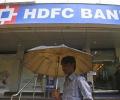
With the merger between HDFC Bank and HDFC Ltd complete, analysts said the next key monitorable for the Street would be successful resolution of merger-related hiccups, including employee-related churn and roll out of complete banking services across branches. At the bourses, they expect the stock to perform in-line with the benchmark indices in the near-term. "There's usually an initial period of consolidation after a merger as the entities work towards integration.

With the markets scaling new highs, as many as 43 stocks from the Nifty50 index and 27 of the 30 scrips that are part of the S&P BSE Sensex are trading above their respective 200-day moving average (DMA). The 200-DMA is seen as one of the most relevant trend indicators by investors and traders, who believe that stocks and indices trading above this level possess strength and are likely to rally in the short to medium term, while the ones trading below this level are viewed as bearish and expected to see a sell-off. Wipro, UPL, Kotak Mahindra Bank, Hindalco, Infosys, Cipla, and Adani Enterprises are the only stocks from the Nifty50 pack that are still below their respective 200-DMA, the exchange data suggests.
Zomato has lost over 9 per cent thus far in calendar year 2023 (CY23) and has underperformed the S&P BSE Sensex that has slipped nearly 5.3 per cent during this period. Despite this underperformance, analysts at HSBC think that the stock can hit Rs 87 going ahead - up over 64 per cent from the current levels. The food delivery industry, wrote Yogesh Aggarwal and Abhishek Pathak of HSBC in a recent note, has slowed considerably in the last few months.
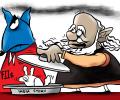
Foreign portfolio investors (FPIs) turned net buyers in October after being net sellers in the previous month. In October, FPIs bought shares worth nearly Rs 8,430 crore ($1 billion) against net selling of Rs 13,405 crore ($1.6 billion) in September. Positive flows during three of the previous four months have pushed the domestic markets towards fresh all-time highs. At present, the Sensex and Nifty are less than 2 per cent shy of breaching record highs logged in October 2021. A rally in equity markets in the US and Europe is in hopes that the Federal Reserve may go soft on rate hikes after its November meeting.

The state with the most people has displaced the state with the largest economy in terms of investor additions. Uttar Pradesh (UP) added 126,000 new investors in April, reveals National Stock Exchange (NSE) disclosures. This is higher than Maharashtra's 118,000. Maharashtra, which is home to India's financial capital of Mumbai, has traditionally been the biggest source of investors.


The Indian economy recovered from the Covid-induced downturn during 2022 and is poised for further improvement in the coming quarters though downside risks emanating from geopolitical tensions, strengthening dollar and elevated inflation will continue. The positive trajectory in the growth trend and improved fundamentals will help the nation in neutralising the impact of global headwinds which are expected to have a bearing on the country's exports in the months to come. The challenges before the government and the Reserve Bank in the new year would be to arrest inflation, check declining value of rupee against US dollar and promote private investment and growth, with a view to ensure that the country remains one the fastest growing major economies of the world.

'It may sound like sacrilege, but does it really matter if the global raters downgrade India for fiscal slippage?' asks Tamal Bandyopadhyay.

An analysis of S&P BSE 500 companies suggests that promoters of Indian private-sector companies in particular could end up paying at least 20 per cent more as additional tax on the same dividend income.

Stating that an economic recession gripped global economy following the lockdowns due to COVID-19 pandemic, Fitch Ratings on Friday said the initial disruptions to regional manufacturing supply chains in China have now broadened to include local discretionary spending and exports.
While the collapse of a large financial intermediary can wreak havoc on the system because of the interconnectivity, a large business conglomerate too can play spoilsport if the banks have too much exposure to the entity, explains Tamal Bandyopadhyay.

In a report on the rupee's depreciation, S&P said, "Revenue for companies that export and operate overseas would rise, because they would get more rupees for the goods and services they sell."

Stating that COVID-19 has not yet been contained in India, the rating agency in a statement said the government stimulus package is low relative to countries with similar economic impacts from the pandemic. "The COVID-19 outbreak in India and two months of lockdown -- longer in some areas -- have led to a sudden stop in the economy. That means growth will contract sharply this fiscal year (April 2020 to March 2021)," it said. "Economic activity will face ongoing disruption over the next year as the country transitions to a post-COVID-19 world."

'The market will focus on the fact that India does have strong earnings growth this year.'
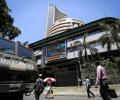
Bank Nifty pared all its intraday gains to end over 1% lower led by losses in BoB, ICICI Bank, Axis Bank and Bank of India

Experts feel select companies in banking, automobiles, financial services & real estate will gain from lower interest rates

Shares of telecom services providers - Reliance Industries (parent of Reliance Jio), Bharti Airtel, and Vodafone Idea - have shed up to 23 per cent so far in the current calendar year as growth in the wireless subscriber segment begins to plateau amid higher tariffs and rising costs of smartphones. By comparison, the benchmark S&P BSE Sensex, and sectoral index BSE Telecom have dipped 1.8 per cent, and 12.6 per cent, respectively, ACE Equity data shows. However, analysts expect the trend to reverse soon as telecom services providers focus on the next leg of growth -- fixed broadband (FBB) segment.

The S&P BSE Midcap and the S&P BSE Smallcap indices slipped in red to shed over 1% each

The FMCG sector is generally considered to be a safe haven during difficult times as people never stop buying soap and toothpaste. However, weak rural and semi-urban demand has been a factor since the lockdowns of 2020-21 while rising inflation has also impacted margins. While the FMCG majors have survived on the basis of price hikes and good management practices, they have seen growth slowdowns and experienced margins being squeezed as raw materials and transport costs rose. The FMCG sector witnessed positive volume growth in the fourth quarter of the 2022-23 financial year (Q4FY23) after five consecutive quarters of decline, and the rebound in demand was led by urban markets.

Tightening Russian gas supplies to Europe has led to scramble for tankers before winter sets in.
Rate-sensitive sectors like banks, auto and realty witnessed strong buying demand in trades today

TCS, Bajaj Auto, Adani Ports and Cipla were the top gainers on BSE Sensex while Coal India, GAIL, Dr Reddy's and Infosys lost the most on the index.
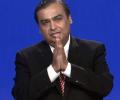
However, in the last few sessions, the stock of Mukesh Ambani-controlled Reliance Industries Limited (RIL), hit its 52-week low level of Rs 2269.75, and has been one of the worst performers among the Sensex pack thus far in calendar year 2023 (CY23). Thus far in CY23, RIL has tanked nearly 11 per cent as compared to a fall of around 5 per cent in the S&P BSE Sensex. The fall in the stock, according to Gaurang Shah, senior vice-president at Geojit Financial Services is mostly due to the overall dip in the market sentiment, which in turn has impacted large-caps, including RIL.

The improved outlook on the Government of India announced by rating agency Moody's might need to be viewed with some scepticism. There is no doubt the performance of the Indian economy has sharply improved from the deep trough it hit last year. But the ability of the second largest global ratings agency to assess an upside and downside before events make everyone wise about India has been dismal for a long time, as the chart shows.

The government's target of hitting $52 billion to $58 billion in mobile phone exports in FY26 has been faltering; an Indian corporate group with financial muscle will help.

An aggressive rate hike by the US Fed and the possibility of a recession can trigger a slide in these stocks, which will be a good opportunity to buy from a long-term perspective.

The S&P and Dow dipped the most in a day since September 28.

The sharp correction in equity markets has taken a toll on mid-and-small cap stocks that have underperformed their large-cap peers. Thus far in calendar year 2022 (CY22), the mid-and-small cap indexes on the BSE have slipped over 8 per cent and 7 per cent respectively, as compared to a fall of around 6 per cent in the S&P BSE Sensex. While investors dumped mid-and small-cap stocks as the markets remained choppy over the past few weeks, analysts still expect these two segments to see good investor interest from a medium-to-long term perspective.
The central bank will come out with fresh set of guidelines for companies applying for on-tap bank licence

With the world's worst outbreak of COVID pandemic stalling a nascent economic recovery, the government has begun assessing the impact of the second wave of infections on different sectors and may look at providing support at an appropriate time to segments requiring fiscal help. Some of the economic indicators, including the Goods and Services Tax (GST) collections, still provide confidence and incoming data will throw some more light on the state of the economy, sources said. Services sectors like hospitality, tourism and aviation which had just started recovering were hit hard by the second wave of COVID, the sources said, adding these segments might need some support on an urgent basis from the government.

The Sensex and the Nifty witnessed biggest one day loss in percentage terms since June 24

With an m-cap of Rs 31,744 crore, IRCTC stood at 96th position in the overall market capitalisation ranking, the BSE data shows.

Equity markets halted their two-day rally on Friday, with the Sensex tumbling 714.53 points amid weak global equities and selling in index majors Infosys, ICICI Bank, HDFC Bank and Reliance Industries. Continuous foreign fund outflows also dented sentiments. The BSE benchmark Sensex tanked 714.53 points or 1.23 per cent to settle at 57,197.15. During the day, it plummeted 776.96 points or 1.34 per cent to 57,134.72. The NSE Nifty also declined 220.65 points or 1.27 per cent to 17,171.95.
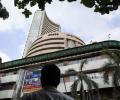
Financials were the top gainers lead by private lenders ICICI Bank and HDFC Bank

Global rating agency Standard & Poor's on Thursday warned Asia may see lower growth this year due to adverse impact of oil price pressure and tsunami, but said India will be an 'exception.'
 © 2026 Rediff.com - Advertise with us - Disclaimer - Privacy Policy - Sitemap - Feedback - About us - Terms of use - Grievances